Statements
Statement on Austin Lawrence’s Death
On Thursday, March 20th, 2025, a young man named Austin Lawrence from the Lummi Nation died in the Whatcom County Jail at the age of twenty-eight. We cannot fathom the grief that Austin’s friends and family are feeling in losing a loved one in such a devastating way. This unjust occurrence marks the third death in the Whatcom County Jail in the last thirteen months, making it one of the deadliest jails in the region. Austin had been incarcerated in the Jail for only four days, showing that even brief contact with carceral systems is increasingly deadly. “Even a day or two in pretrial detention can destabilize a person’s life for years to come, contributing to its counterproductive influence on safety and justice” (Prison Policy Institute).
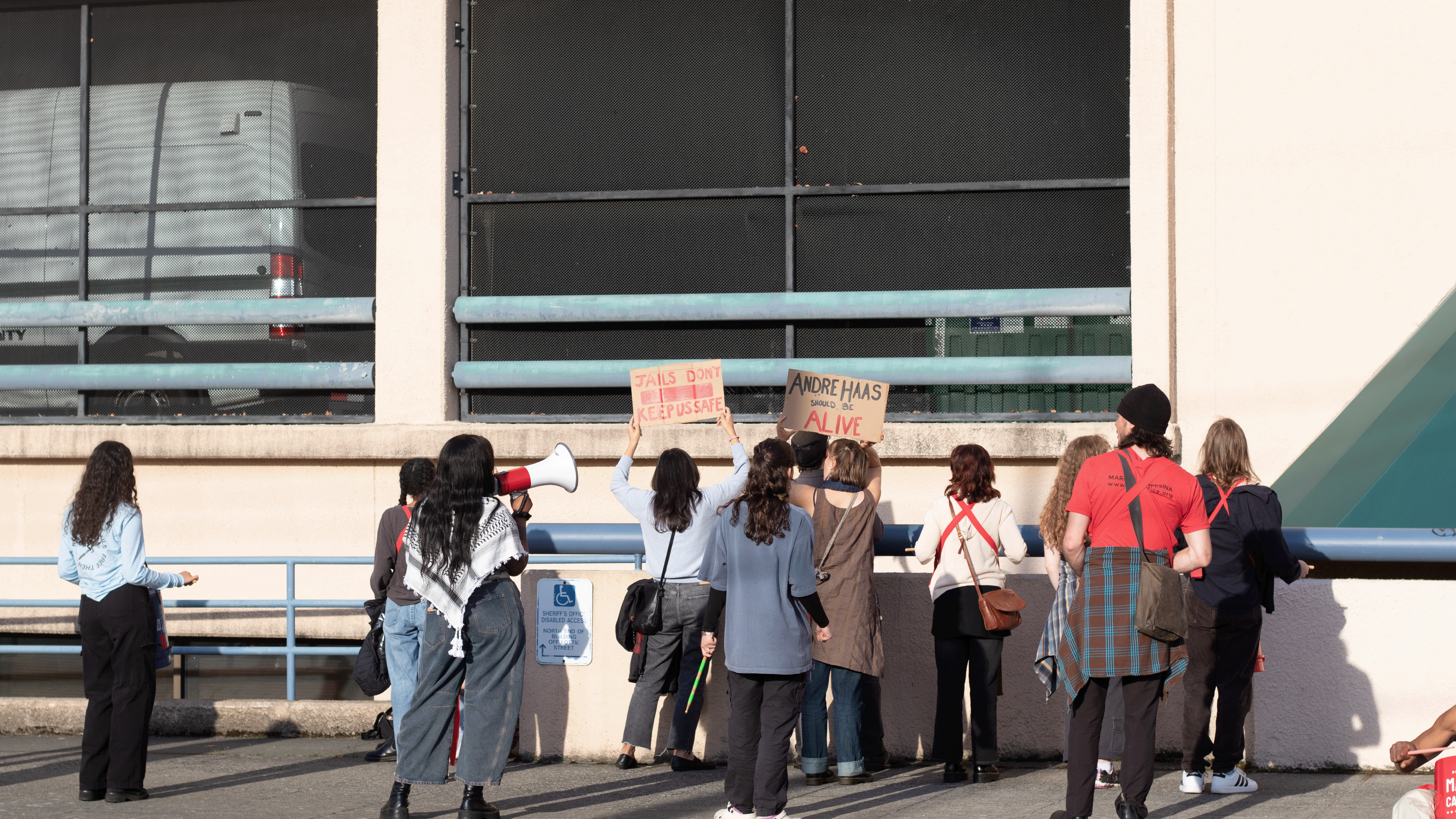
Since its construction in 1984, the Whatcom County Jail has killed at least 16 people. The most recent before Austin was the death of Darren Nixon on January 19th, 2025, and Andre Haas, who died on March 13th, 2024. In this statement, we honor the other lives lost, named and unnamed: Michael Rosser (1997), Ian Morris (2000), Theodore Plaster III (2005), Unknown (2006), Vincent Kochajda (2010), Lacey Leann Wilson (2012), Shannon Jefferson (2014), Eric Aybar (2014), Timothy Blair Drafs (2015), Paula Jefferson (2017), Kirk Powless (2018), Billy Bad T. Lewing (2018), Casey Hughholt (2023). We cannot allow the jail to shirk responsibility for Lawrence’s death and we will not allow this destructive narrative to go unnoticed or unchallenged. May they all rest in peace.
Every one of these deaths was preventable, and all of these people should be with us today, despite the opposing statements and depictions from the Sheriff’s Department. Sheriff Tanksley released a statement on Austin’s death on March 20th, stating “The loss of a detainee is a devastating reminder of the immense responsibility that comes with caring for those in our custody.” The implication that incarcerated people are “cared for” in jails is false, and the increasingly frequent deaths prove this. Jails, by design, are unsafe. For the environment, for the outside community, and, most of all, those subject to its violence directly inside.
Tanksley’s statement also says, “It weighs heavily on my heart and on the hearts of our personnel, who are deeply committed to ensuring the safety and well-being of all those in our care.” This disingenuous claim ignores entirely the ongoing suffering of those incarcerated in the Whatcom County Jail system, who have been forced to endure medical neglect and overall systemic disinvestment. The constant verbiage of “care” in tandem with incarceration is intentional and is symptomatic of neoliberal politics that seek to expand policing and prisons as a “fix” to social issues.
Of the 16 people Whatcom County Jail has confirmedly killed, at least 31% are people from Lummi Nation, though Indigenous people and Black people made up, respectively, “14% and 7% of the average daily jail population in 2016, and make up only 4% and 2% of the county population” (Vera Report). In a town where racist policing and inequity are the norm, the jail remains a primary source of “healthcare” for a large percentage of BIPOC and low-income people of Bellingham who are over-policed. The jail is not an appropriate place to provide medical, mental health, or substance care. However, it is often positioned as the only way to access even these meager and neglectful services. Incarceration is not care; jails are inherently unsafe and cause otherwise preventable deaths. Locking people away, stripping them of their autonomy, and isolating them, all while stripping education, health, and re-entry service budgets does not equate to any form of care.
Medical neglect runs rampant in the Whatcom County Jail. Denial to timely and effective care is the concern we hear most about from those inside. Nixon’s death earlier this year was a result of this continuous neglect. In a letter written to the Pen Pal Program, a friend of Nixon’s, also incarcerated in the Jail, stated “He [Nixon] was in so much back pain, he couldn’t even stand or walk […] We had to ask the officers six times to come help him […] we witnessed [him] suffer for days and the medical staff did nothing.” The jail, a death-making institution, is not an appropriate place to provide medical, mental health, or substance care. We have also heard from our friends inside the jail that officers violate their internal policies by not checking cells regularly.
In November 2023, Whatcom County approved a regressive jail tax to build a mega-jail in Ferndale. The tax was voted down in 2015 and 2017, but in 2023, the County took on a new approach, co-opting language of “justice” and “care” to appeal to voters, with no plan to follow through. The new mega-Jail will include an attached treatment facility, though, when looking at the details of the Proposal, it states that this center will be “considered” six years after the mega-jail’s construction. By then, the county officials who made this promise will likely not be in office, making it impossible to hold them accountable for this performative promise. These services will also likely be restricted to certain people deemed most worthy by racist and colonial logic. Yet, we know that services attached to jails do not truly help people and are often punitive and involuntary. This shift is a part of a national trend that attempts to humanize and redefine jails as “caring social service centers,” to disinvest in social safety nets. This provides a moral justification to increase incarceration instead of addressing the root causes of systemic poverty, abuse, and discrimination.
When we envision abolition, we think of building up systems of care as much as we think of bringing down the oppression of prisons and policing. By addressing the root causes of systemic poverty, racism, transmisogyny, and other forms of discrimination, we prevent people’s contact with deadly carceral systems. Incarceration depends on control and captivity, and while arguments surrounding their ineffectiveness are prominent, we need to remember that they are working as they are meant to. No amount of reform will stop the emotional and physical damage incarceration causes. We must practice and create systems that make the jail and all carceral systems in Whatcom County unthinkable and obsolete.
Signed,
Unchain Whatcom & The Whatcom Pen Pal Project (WPPP)
 UNCHAIN WHATCOM